
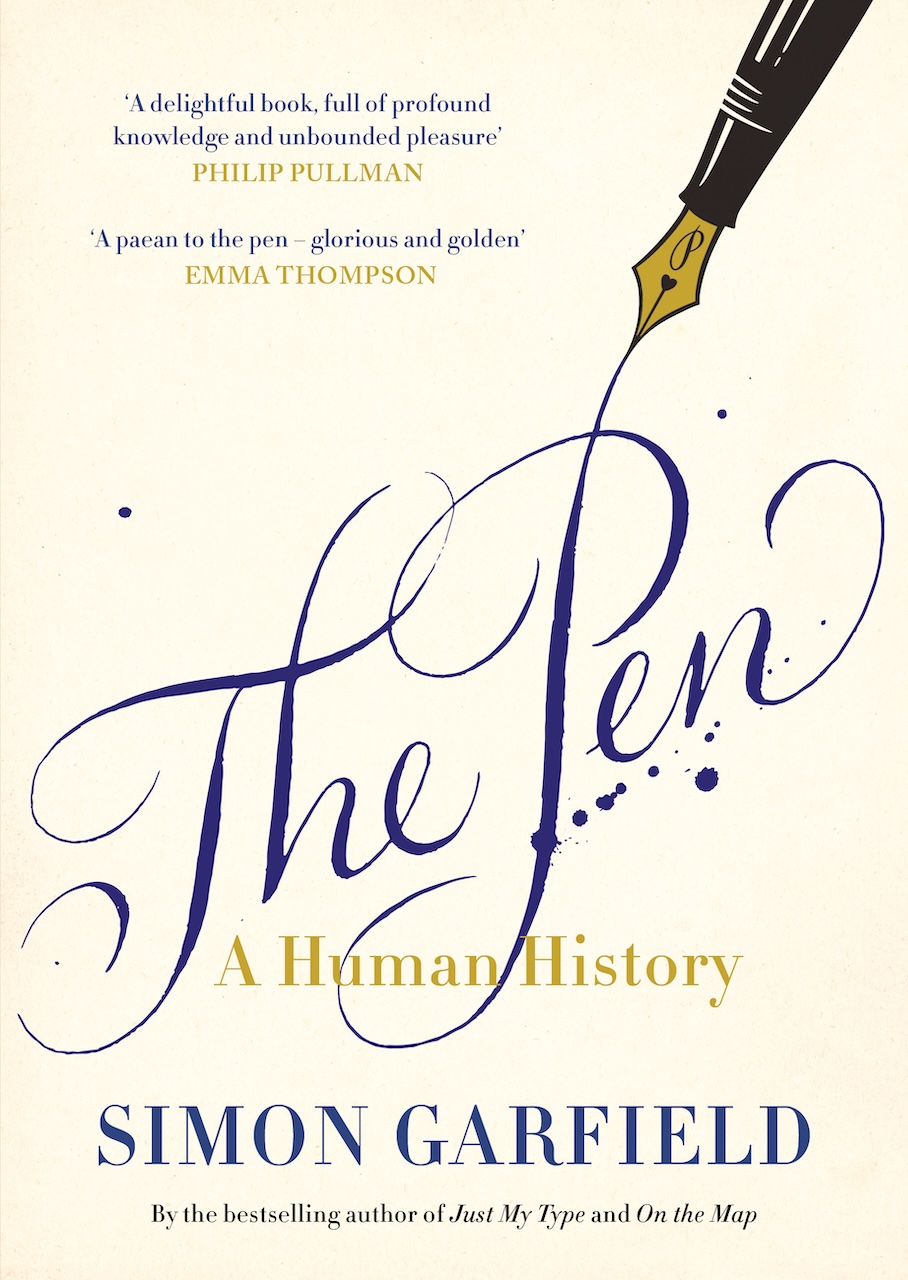
The Pen: A Human History
This is a book about the most humble of technologies.
It’s an examination of how we used to write, and how we write now, and how the history of the pen, over the centuries, has been frequently as interesting as the events it described.
If you like and use pens, and are interested in what Austen, Dickens and Freud thought of their pens, and what pens Colm Tóibín, Margaret Atwood and Julian Barnes use now, and you want to read about how Montblanc and Bic make and sell their wares, this book should suit you well. There are also chapters on ink, pen murders, pens at war and the bestselling pen that refused to write. There’s a nice section on James Bond and pens in the movies, and an important section on the attempts by many people to ensure that the pen somehow survives the digital onslaught. And at the end I write about all the pens I used to write the book.
Above all, The Pen celebrates the existence of something that has marked human progress for thousands of years. With the 200th anniversary of the invention of the fountain pen in 2027, it seemed like a good time to take stock.
Simon Garfield
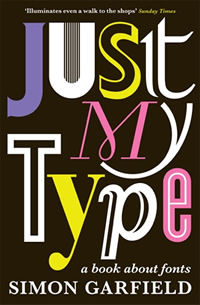
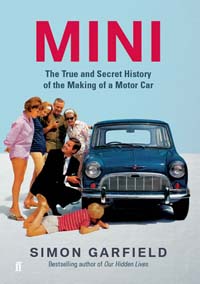
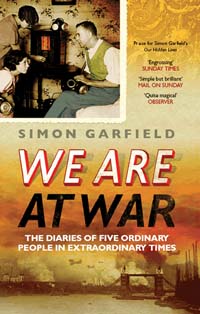
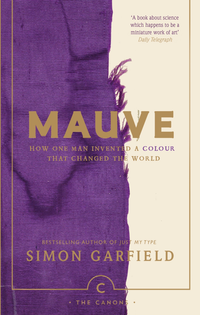
Simon Garfield was born in London in 1960. He is the author of an appealingly diverse and unpredictable canon of non-fiction, including the bestsellers Mauve, Just My Type and On The Map. He is a trustee of Mass Observation, and is the editor of several books of diaries from the archive, including Our Hidden Lives and A Notable Woman. His recent books include Timekeepers, In Miniature, and All the Knowledge in the World: The Extraordinary History of the Encyclopaedia.

Other Books








After the wheel, the pen must be the second most important invention in human history. Or perhaps the most important: we can use a pen to describe a wheel, but we can’t use a wheel to describe a pen. The many forms of this mark-making tool, from the simplest to the most extravagantly inventive, are celebrated in Simon Garfield’s delightful book, full of profound knowledge and unbounded pleasure